
How do functional blood tests differ from standard GP blood tests?
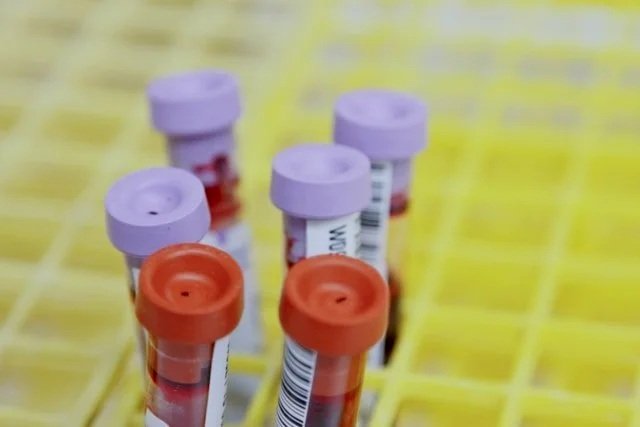
Photo by National Cancer Institute on Unsplash
If you've ever walked away from a GP appointment feeling dismissed, results in hand, told everything looks ‘normal’, but still exhausted, struggling, and wondering why you feel so rubbish, this is for you.
You're not imagining it. And you're not alone.
This is exactly where functional blood testing comes in. As a nutritional therapist, this is one of the most common experiences my clients describe when they first come to see me. They've often spent months, sometimes years, going back and forth with their GP, having blood tests done, and being reassured that nothing is wrong. Yet they feel far from well.
So, what's going on? Often, it comes down to the difference between standard blood testing and functional blood testing – and understanding that difference can be genuinely life-changing.
What your GP typically tests for
Standard NHS blood tests are valuable. They're designed to identify serious conditions, monitor chronic disease, and give a useful snapshot of your overall health. A typical panel might include:
A full blood count (red and white blood cells, platelets)
Basic metabolic markers (kidney function, liver enzymes, electrolytes)
A basic lipid panel (total cholesterol, HDL, LDL, triglycerides)
TSH – a single thyroid marker
Diabetes screening (fasting glucose or HbA1c)
These tests absolutely have their place. The problem isn't that they're bad. It’s that they're limited in scope and interpreted through a particular lens.
The ‘normal’ vs ‘optimal’ problem
Here's something I explain to almost every client I work with: being told your results are ‘normal’ doesn't necessarily mean your body is functioning at its best.
Standard reference ranges are based on population averages – essentially, what's typical across a broad cross-section of people, which isn't always a healthy population. These ranges are primarily designed to identify disease. So, a result can sit comfortably within the ‘normal’ bracket while your body is still struggling.
Functional or optimal ranges, on the other hand, are narrower. They reflect where the body tends to function most efficiently, and they can highlight early signs of imbalance long before a diagnosable condition develops.
Vitamin D is a good example of this. I regularly see clients with vitamin D levels of around 50–55 nmol/L who have been told by their GP that their levels are fine. And technically, by NHS reference ranges, they are. But in functional nutrition, I'd be looking for levels of 75–125 nmol/L for optimal immune function, mood, bone health, and energy. That gap between ‘not deficient’ and ‘truly optimal’ can make a significant difference to how someone feels day to day.
This is exactly why it's possible to be told everything is normal and still feel awful. Normal doesn't always mean optimal.
What functional blood testing looks at differently
Beyond interpreting results through an optimal lens, functional blood testing also looks at a broader range of markers – ones that rarely feature in a standard NHS panel but can be enormously revealing:
Full thyroid panel. A standard GP test will usually only check TSH (thyroid stimulating hormone). But this gives you just one piece of the picture. A full thyroid panel includes free T3, free T4, reverse T3, and thyroid antibodies (TPO and TG). This is important because someone can have a TSH within the normal range while their free T3 (the active thyroid hormone) is low, or while antibodies indicate an autoimmune process like Hashimoto's is underway. Without testing these markers, that picture stays hidden.
Complete iron panel. A GP may test ferritin, and sometimes a full blood count but rarely both together, and rarely alongside serum iron, transferrin saturation, and TIBC. Running a complete iron panel alongside a full blood count is essential, because the markers only tell the full story when interpreted together. Low ferritin, even within the ‘normal’ range, is one of the most common and overlooked drivers of fatigue, hair loss, and poor thyroid function I see in clinic.
Active B12. Most standard tests measure total B12, but this doesn't tell you how much is actually available for your body to use. Active B12 (holotranscobalamin) does. Someone can have a total B12 result that looks perfectly fine while still being functionally deficient – meaning their cells aren't getting what they need.
High-sensitivity CRP (hs-CRP). Standard inflammation markers are typically only flagged when something is significantly elevated. Hs-CRP is a more sensitive measure that can pick up low-grade, chronic inflammation – the kind that quietly underlies fatigue, brain fog, joint pain, and a host of other symptoms without showing up on a basic test.
Advanced lipid panel. A standard cholesterol test tells you your total cholesterol, HDL, and LDL. But cholesterol particle size matters enormously when assessing cardiovascular risk. Small, dense LDL particles are far more concerning than large, buoyant ones, and this distinction simply doesn't appear on a basic lipid panel.
Why this matters if you've been struggling for a while
If you've been managing ongoing health issues – fatigue, brain fog, mood changes, hair loss, weight struggles, poor sleep – and keep being told your tests are fine, functional blood testing may offer a much clearer picture of what's actually going on beneath the surface.
It's not about dismissing what your GP has done. It's about going deeper, asking different questions, and interpreting the answers through the lens of how well your body is actually functioning – not just whether it's technically within range.
Thinking about exploring this further?
If any of this resonates, I'd love to have a chat. I offer a free, no-obligation 20-minute call where we can talk through your symptoms and health history and explore whether more detailed blood testing might be helpful for you – or whether there's another avenue worth investigating.
Already had blood tests done recently? I also offer a blood test interpretation session, where we go through your existing results together and identify what might have been missed or warrants further investigation.