
Photo by Harlie Raethel on Unsplash.
Imagine you're carrying the washing downstairs and you miss the last step. You wobble, land on your wrist, but get up and carry on. It’s a clumsy Tuesday, nothing more.
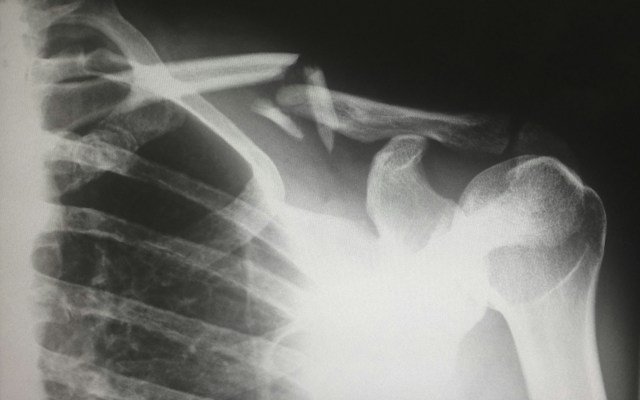
With osteoporosis, that wobble can end with a broken bone.
I'm a nutritional therapist, so I can't diagnose and make medical treatment decisions like your GP can. But what I can do is explain what it is, what's going on, and where nutrition fits in to help support you if you are given that diagnosis.
What is osteoporosis?
Osteoporosis is a condition that makes your bones weak and fragile, so they're more likely to break after a minor fall or bump. And because it builds up over several years, plenty of people only find out when a fall or sudden impact causes a bone to break.
Bone is living tissue that's constantly being broken down and replaced. Think of the process like a busy building site.
All day, every day, a demolition crew clears out old bone, while a team of builders puts new bone in. In our younger years, the demolition crew and the builders keep up with each other, but as we age, the demolition crew gets a bit faster and the builders get a bit slower. Losing some bone is a normal part of getting older.
Osteoporosis is what happens when the builders can't keep up. The walls of our bones get thinner, and thinner walls are more likely to give way.
Would you know if you had osteoporosis?
Not in the early days, as you can have osteoporosis without any symptoms. It's not until the later stages that symptoms start to appear. You might notice:
Getting shorter (the result of a weakened spine)
Broken bones
Back or neck pain
Bone pain and tenderness
Tooth loss
Leg cramps at night
Difficulty breathing (from compressed spinal bones)
Digestive or abdominal discomfort
But there's no warning light on a dashboard. That's why it's worth knowing the signs and the risk factors before anything breaks.
Why does the menopause matter for your bones?
Your bones are renewed all the time, and hormones help direct that process. Women are more at risk of osteoporosis because of the hormone changes that come with the menopause. Two things can increase that risk:
An early menopause (before 45)
A hysterectomy before 45, with the biggest concern when the ovaries are removed as well
If you're in your forties or fifties and wondering why nobody mentioned bones when they talked about hot flushes, you're not alone. In my book, the earlier you start looking after your bones, the better. You don't need to wait for a diagnosis to start asking questions.
What else can put you at risk of osteoporosis?
The menopause isn't the whole story. Plenty of other things can nudge your risk up, and some of them might sound familiar. Let's start with what's going on inside your body:
Your genes. Some of us inherit differences in how we build bone, break it down, handle inflammation, and use calcium and vitamin D. If a parent has had osteoporosis or broken a hip, that's worth considering.
Your hormones. Sex hormones steer bone renewal: oestrogen and progesterone in women, testosterone in men. Women's levels take a sudden drop at the menopause, while men's testosterone slides down over many years, which is a big reason women are affected more. Bones don't come up much in men's health chats, but they should.
Your thyroid. A thyroid that's running too fast speeds up bone breakdown, which can leave you with lower bone density.
Your digestion. You can be eating all the right things, but still run short if you're not digesting and absorbing the nutrients efficiently. Coeliac disease and Crohn's disease are good examples. Your gut bacteria matter too. Researchers call the link the gut-bone axis, and one gut bug, Faecalibacterium prausnitzii (try saying that after a glass of wine), has been linked with bone formation.
Your medication. Long-term use of some medicines, including steroid tablets and thyroid medication, can interfere with how bone renews and how well you absorb calcium. But please don't stop or change anything without talking to your GP first.
And then there are the things you have more control over:
Nutrient gaps. Calcium gets all the attention when it comes to bone health, but vitamins D, K and C, magnesium, boron and silica all play a part too. Run low on them, and your risk of bone loss goes up.
What's on your plate and in your glass. A diet heavy in sugar, fizzy drinks, alcohol and processed food can increase the loss of calcium from your bones. Smoking and heavy drinking don't help either.
Long-term stress. It's thought to draw calcium out of your bones and make it harder to absorb what you take in.
Heavy metals. Environmental metals, such as lead, can displace calcium in bone.
Not moving much. Bone rebuilds in response to the load you put through it, so long spells of sitting still are a major risk factor.
Not eating enough. Eating disorders such as anorexia or bulimia, or a low body weight for a long time, mean less fuel and less load for your bones.
If any of these factors resonate, it doesn't mean you will develop osteoporosis, but it does mean it's worth starting to think about your bones sooner rather than later.
How is osteoporosis diagnosed?
Your GP will look at your risk, ask about symptoms and may refer you for a bone density scan, called a DEXA scan. That's the test that shows how strong your bones are.
If you'd like a starting point before you speak to anyone, the Royal Osteoporosis Society has an online risk checker that takes a few minutes. It's for UK adults who haven't been diagnosed with osteoporosis, and it isn't a diagnostic tool. Think of it as a prompt for a chat with your GP, not an answer.
What's the difference between osteopenia and osteoporosis?
You might have been told you have osteopenia, and wondered whether that's just osteoporosis in disguise.
Osteopenia is when your bones start to lose strength. Your bone density sits below the normal range for a young adult, but not low enough to count as osteoporosis. And being diagnosed with osteopenia doesn't mean you're guaranteed to be diagnosed with osteoporosis.
What can nutrition and lifestyle do to support bone health?
Bone health is about more than calcium.
Calcium can't build bone on its own. It needs the right hormones, the right helpers and a gut that can absorb nutrients efficiently. So, what keeps the building site running?
Efficient digestion. Think of your gut as the loading bay. If stomach acid is low, bile flow is sluggish or the gut lining is irritated, calcium, magnesium, zinc and vitamins A, D, E and K can turn up at the door and don't make it onto the site. That's how someone can eat well and still run low on these nutrients. Your gut bacteria help here too, by making vitamin K2 and calming inflammation.
The supporting cast. Vitamin D helps you absorb calcium. Vitamin K2 is the traffic controller, helping direct calcium into bone rather than soft tissue, such as your artery walls. Magnesium helps switch vitamin D on, and protein and vitamin C supply the building blocks for collagen.
Collagen. Minerals make bone hard, but collagen gives it the flex to take a knock without cracking. Low protein, low vitamin C, inflammation and wobbly blood sugar can all weaken it.
Steady blood sugar. When there's too much sugar in your blood, it can stick to collagen and make it stiff and brittle. Regular meals with protein and fibre help keep your blood sugar in check.
Calmer inflammation, stress and sleep. Ongoing low-level inflammation and high levels of the stress hormone cortisol both push the demolition crew to work harder. Poor sleep, ultra-processed food and sitting all day feed the inflammation and cortisol.
Plant oestrogens. Flaxseed, soy, sesame seeds and chickpeas contain phytoestrogens, which act like a gentle version of oestrogen. They don't replace it, but they may help soften the drop during perimenopause and the menopause.
Habits that tip the scales. Alcohol, a lot of salty processed food and heavy caffeine intake can all nudge calcium loss up.
Then there's movement, the bit that costs nothing. Bone builds when it's given a reason to, so aim for a mix:
Strength work, such as lifting, pushing and pulling
Weight-bearing movement, such as walking, hiking or dancing
Gentle impact, such as small hops or skipping, introduced bit by bit
Balance work, such as single-leg stands, yoga or tai chi, because preventing the fall matters as much as strengthening the bone
Consistency beats intensity. If you've been diagnosed with osteoporosis, check with your GP or physio before starting any impact work.
Has any of this resonated?
Maybe you're coming up to the menopause and bones have never crossed your mind. Maybe you've a long history of taking steroid medication. Maybe your gut has been niggling you for years and you've wondered what else it's affecting.
If something here made you think "Ah, that's me", you're welcome to book a free chat with me. You can talk through where you are, what you've already tried, and we can discuss the options available to you.